
Ceno is building a borderless internet
Our motto is ‘Share the Web!’
because that is what our users do.
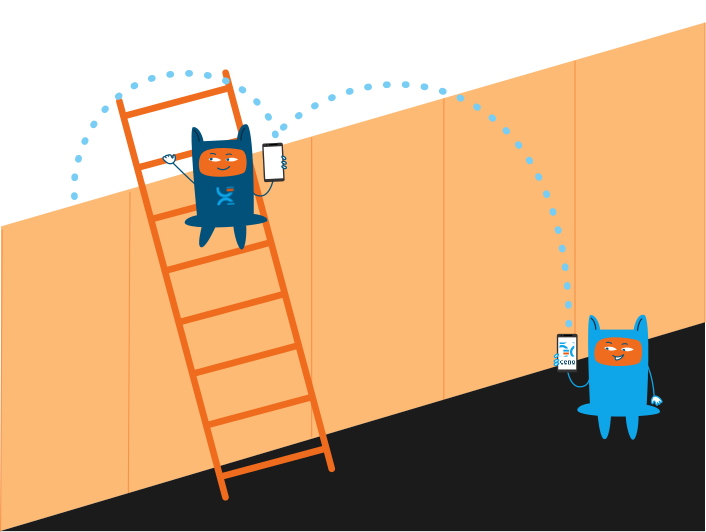
There are many tools available to people who face internet restrictions, but these tools often don’t help people in the midst of internet shutdowns, blockages, VPN breaks and other disruptions.
Ceno is different. People using Ceno Browser are able to access a library of saved internet content that continues to be available during service interruptions.

That’s where sharing the web comes in: users with access to content or a stable network help to collect and share content with those who don’t. This means, for example, that a Ceno user in Azerbaijan can read a blocked article if another Ceno user in Italy has pulled up the same one.
This is made possible by people running Ceno from countries with more reliable and open access to the internet – we call these users “Bridges“. Bridges can share content with people using Ceno in heavily restricted networks.
The team behind Ceno
Ceno is created and maintained by the Canadian not-for-profit organization eQualitie in support of Articles 18, 19 and 20 of the Universal Declaration of Human Rights. We have over ten years of experience creating and advancing tools to protect freedom of speech, facilitate information exchange, and promote self-expression on the internet.
Ceno — and all accompanying components of the tool that together create a decentralized network of peers and nodes — is free and open source software. You can inspect our code or re-create the entire network yourself!
Is Ceno for me?
Ceno is for everyone. It can replace your existing mobile browser as it shares many of the same functions and features.
If you’re running Ceno from a region with open access to the internet, you’ll access content the same way you would on a mainstream browser. The benefit is that you can choose to help other Ceno users while you browse by becoming a Bridge.
Ceno is especially useful for people facing internet censorship or connectivity issues.

Citizen

Student

Human rights defender

Journalist
Technologist